Sanitary Landfill in Maliq
The sanitary landfill, located approximately 750 metres north of the village of FSHAT Maliq in Maliq Municipality.
How work is organised at the landfill
Due to changing consumption patterns, waste management has become a major challenge for the local authorities in recent decades. A lack of financial resources and know-how prevented rapid solutions from being realised. Before the construction of this sanitary landfill in Maliq, there were numerous uncontrolled dumpsites in Korçё region. These dumpsites have posed a danger to the environment and people at several locations.
With the support of the German Government through KfW Entwicklungsbank, the first sanitary landfill of Albania has been constructed in Maliq. The landfill has been designed and constructed considering high environmental standards of European Union.

The aerial view of the landfill in June 2025
Every waste collection truck entering the landfill site is weighed so that the quantity and volume of the waste disposed in the landfill can be monitored.
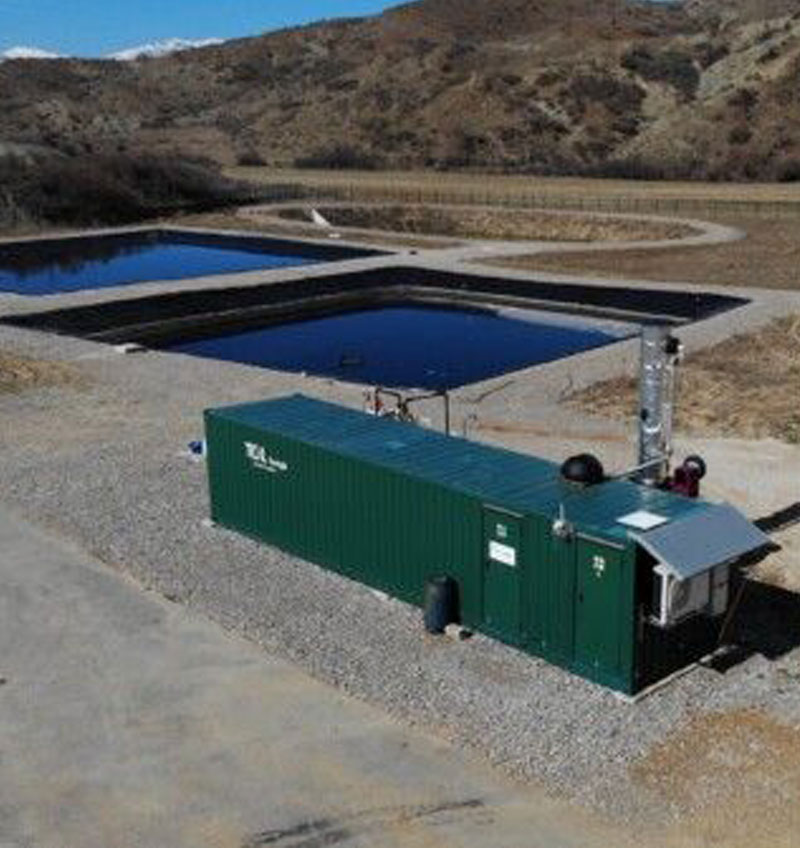
Leachate treatment plant
In order to prevent windblown littering, bad odours, access of animals, the waste is regularly covered with soil.
After achieving sufficient quantities of waste, a landfill gas collection system will be installed. The landfill gas contains methane which is a greenhouse gas and 21 times more harmful than carbon dioxide. In order to eliminate methane, the collected gas will be burned in a special treatment plant. The generation of landfill gas will continuously be monitored and if the methane content and the quantity are sufficient, a gas engine will be installed to generate electricity and heat using landfill gas.
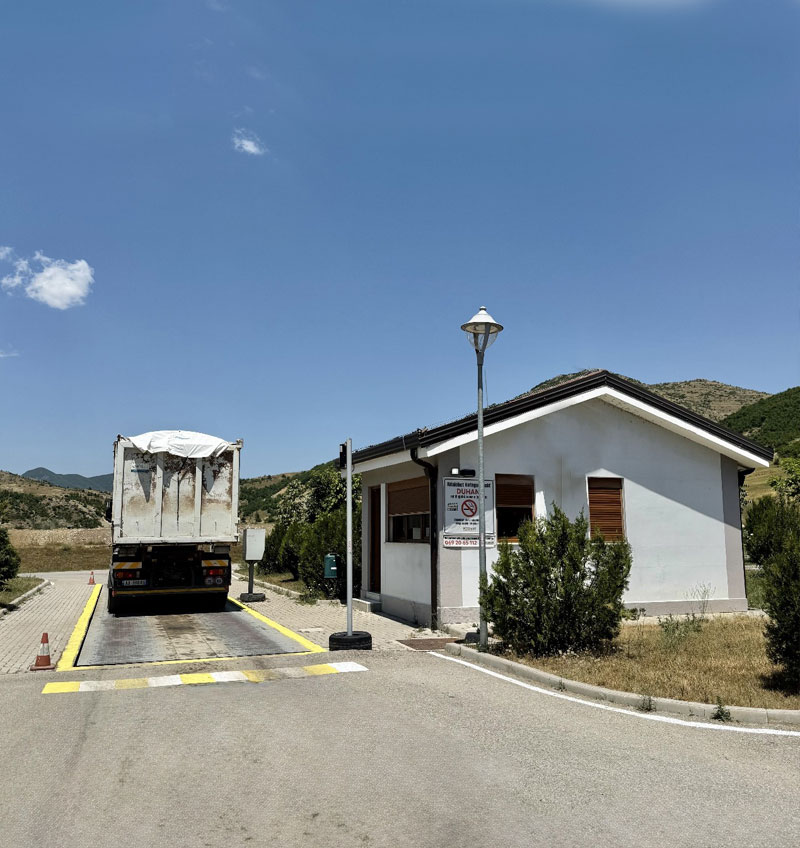
Weighing of a waste collection truck at the landfill
Before starting with any re-use activity, the waste will be covered with a surface sealing system. This will prevent rainwater from entering the landfill body and thus minimise the generation of leachate and landfill gas. Pipes in the surface sealing system will allow collecting landfill gas for treatment.
According to national regulations, the environmental impacts of the landfill will be monitored for a period of at least 20 years after closure.
